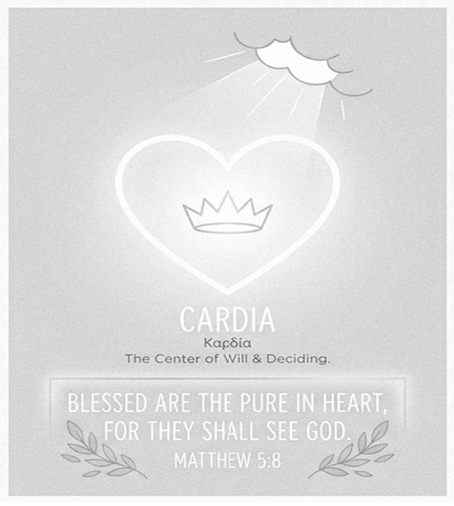
Text – Matthew 5:8
Jesus and the Redefinition of Purity
When modern readers hear the phrase “pure in heart,” many immediately think of moral sincerity or inner honesty.
But for Jesus’ original audience, the word “pure” carried a far deeper and far more explosive meaning.
The Greek word used in Matthew 5:8 is katharos (καθαρός), a term closely connected to the Jewish purity system that shaped much of religious and social life in the ancient world.
To understand how radical Jesus’ words truly were, we must first understand the world He was speaking into.
The World of Purity and Impurity
Following the trauma of exile and national destruction, many Jewish communities developed an intense concern for holiness and purity.
Their reasoning was understandable:
If Israel had suffered judgment because it failed to remain holy as God’s people, then preserving holiness became a matter of survival.
As a result, a detailed purity structure gradually emerged around the Temple and the Law.
This system divided life into categories of holy and unclean.
Time could be holy.
Places could be holy.
Objects could be holy or defiled.
Even people could be classified according to varying levels of purity.
Priests occupied higher levels of ritual purity than ordinary people. Certain diseases, bodily conditions, occupations, or physical limitations could render individuals “unclean.” Those unable to maintain purity regulations—often the poor and socially vulnerable—were frequently pushed to the margins of society.
Purity, therefore, was not merely a spiritual matter.
It became social.
Political.
Religious.
And eventually, purity systems can become systems of exclusion.
Those labeled “unclean” were not simply viewed as unhealthy or unfortunate. They were often perceived as obstacles to God’s holiness and presence.
In practice, this meant many people lived not only with poverty or suffering, but also with the crushing belief that they were spiritually rejected.
Jesus Shifts the Center of Purity
It is precisely in this context that Jesus’ words become revolutionary.
“Blessed are the pure in heart.”
Notice what Jesus does not say.
He does not focus first on ritual washing.
He does not focus on food laws.
He does not focus on bodily contamination.
Instead, He shifts the center of purity inward.
The word kardia (καρδία), translated as “heart,” refers not merely to emotion, but to the center of human thought, desire, intention, and will—the core of the person.
For Jesus, impurity is not fundamentally something that enters the body from outside.
Rather, impurity emerges from within.
This becomes especially clear in Matthew 15, where Jesus confronts debates over ritual handwashing and food traditions.
There He declares:
“It is not what goes into the mouth that defiles a person, but what comes out of the mouth.” (Matthew 15:11)
Later, Jesus explains that evil thoughts, violence, adultery, deceit, and slander proceed from the heart itself.
In other words, Jesus relocates the true battlefield of holiness.
The issue is no longer merely external conformity.
The issue is the condition of the inner self.
A Radical Reversal
This was not a minor adjustment to existing religion.
It was a radical reversal.
Under many purity systems, outward conditions often determined who was accepted and who was excluded.
But Jesus announces a purity that cannot be measured merely through external performance.
And in doing so, He opens the possibility of God’s presence to those who had long been pushed aside by religious judgment.
The poor.
The sick.
The socially rejected.
The morally condemned.
Those whom society labeled “unclean” suddenly hear astonishing news:
God has not abandoned them.
Even more radically, Jesus suggests that someone may appear outwardly religious while remaining inwardly corrupted.
Purity is no longer centered primarily on the body, but on the heart.
And this raises an uncomfortable question that extends far beyond the ancient world:
What kinds of purity standards do religious communities still use today?
And do those standards bring wounded people closer to God—or push them further away?