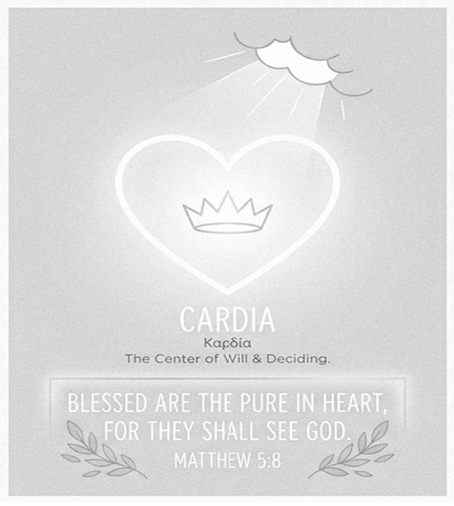
Matthew 5:8
Today’s sermon continues our journey through the Beatitudes found in the Sermon on the Mount.
Jesus declares:
“Blessed are the pure in heart, for they shall see God.” (Matthew 5:8)
As we have discussed in previous messages on the Beatitudes, the word translated as “blessed” comes from the Greek word makarios (μακάριος), meaning “a happy person or a person living in a state of deep flourishing and joy.”
Furthermore, the phrase “they shall see God” reflects what scholars often call the divine passive. In other words, the implied subject behind the action is God Himself.
Thus, the deeper meaning of this Beatitude may be paraphrased as:
“Happy are those whose hearts are pure, because God Himself will reveal Himself to them.”
This raises an important question:
What does it mean to “see God”?
Seeing the Face of God
Within the Old Testament and Jewish tradition, seeing God’s face was regarded as something both extraordinary and nearly impossible.
On one hand, it represented the highest imaginable privilege.
On the other hand, it was also terrifying—because encountering God directly was believed to place human life itself in danger.
God tells Moses:
“You cannot see my face, for no one may see me and live.” (Exodus 33:20)
To understand the magnitude of this idea, imagine a rigid hierarchical society.
For a person of low status to stand before a king or emperor and see his face would have been an unimaginable honor.
How much greater, then, would it be for a human being—a created and finite creature—to stand before the Creator Himself?
For this reason, the Old Testament presents only a few exceptional moments where people are said to have encountered God in an extraordinary way.
Jacob at Peniel
In Genesis 32, after wrestling through the night near the Jabbok River, Jacob gives the place a remarkable name:
Peniel (פְּנִיאֵל), meaning “the face of God.”
Jacob declares:
“It is because I saw God face to face, and yet my life was spared.”(Genesis 32:30)
Of course, this does not mean Jacob literally saw God in the same ordinary way that we see another human face.
Rather, it describes a profound encounter with the divine presence.
Moses and the Glory of God
Moses also desired something astonishing.
In Exodus 33, he asks to see God’s glory.
Yet even Moses—the great leader of Israel—was not permitted to behold God fully.
Instead, Scripture symbolically describes Moses seeing only God’s “back,” not His face.
The message is clear:
Even the greatest figures of faith experienced God only partially.
Isaiah’s Terrifying Vision
The prophet Isaiah provides another striking example.
During his call vision in Isaiah 6, he suddenly finds himself standing before the divine throne.
His response is not joy, but terror.
He cries out:
“Woe to me!… For my eyes have seen the King, the Lord Almighty.”(Isaiah 6:5)
Isaiah believes he may perish.
Why?
Because to stand before the holiness of God was understood as overwhelming and dangerous.
Jesus’ Astonishing Promise
Against this background, Jesus’ words in Matthew 5:8 become far more radical than they first appear.
“Blessed are the pure in heart, for they shall see God.”
This is not a small promise.
Nor is it merely poetic language.
Jesus is declaring something astonishing:
God will reveal Himself to people.
And not merely to prophets.
Not merely to kings.
Not merely to religious elites.
But to those whose hearts are pure.
Of course, this does not mean seeing God physically, as though one were looking at another human being face to face.
After all, Jesus Himself says:
“God is spirit.” (John 4:24)
The promise points to something deeper:
God making Himself known.
God revealing His presence.
God drawing near.
And this naturally leads us to the next question:
What exactly does Jesus mean by “a pure heart”?
The Meaning of the Heart
This naturally brings us to another important question:
What does Jesus mean by “the heart”?
The word translated as “heart” is the Greek term kardia (καρδία).
In the New Testament, this word refers not merely to emotions, but to “the center of a person’s thoughts, desires, intentions, and will.”
In other words, it refers to the very core of human existence.
The Gospel of Matthew repeatedly emphasizes the importance of the heart.
Jesus says:
“Anyone who looks at a woman lustfully has already committed adultery with her in his heart.” (Matthew 5:28)
He also declares:
“Where your treasure is, there your heart will be also.” (Matthew 6:21)
And again:
“Why do you entertain evil thoughts in your hearts?” (Matthew 9:4)
Jesus consistently points beyond outward behavior toward the deeper condition of the inner person.
Even stronger, He says:
“For the mouth speaks what the heart is full of.” (Matthew 12:34)
And later:
“What comes out of a person’s mouth comes from the heart, and these defile them.” (Matthew 15:18)
For Jesus, the heart is not peripheral.
It is central.
The Meaning of Purity
Now we must ask another question:
What does Jesus mean by “pure”?
The Greek word translated as “pure” is katharos (καθαρός), meaning “clean or pure.”
Yet this word carried deep religious meaning in Jewish life because it was closely tied to what scholars often call the Jewish purity system.
To understand the force of Jesus’ words, we must understand the world His listeners inhabited.
The Purity System of the Ancient Jewish World
After returning from exile, Jewish communities became deeply concerned with holiness.
Many believed that Israel’s destruction had happened because God’s people failed to remain holy.
As a result, maintaining holiness became an urgent concern.
Over time, an elaborate purity system developed around the Temple.
This system divided life into categories of holy and unclean.
Certain times were holy.
Certain places were holy.
Certain objects were considered clean or defiled.
Even people themselves could be classified according to varying levels of purity.
Priests occupied privileged positions.
Ordinary Israelites occupied lower levels.
Women, children, foreigners, the sick, and those with physical conditions or disabilities often found themselves increasingly marginalized within these systems.
The result was not merely theological.
It became social.
Political.
Religious.
Entire groups of people came to be labeled as “unclean.”
Those suffering from disease or bodily conditions were often excluded.
People living in poverty—who lacked the resources necessary to fully observe purity laws—could also be regarded as spiritually compromised.
Many became convinced that they stood outside God’s favor.
In time, purity systems became systems of exclusion.
Religious categories began shaping social hierarchies.
And the people most wounded by those structures were often the weakest and most vulnerable.
It is important for us to remember this:
Many of the people listening to Jesus in the Sermon on the Mount were likely those very people.
The sick.
The poor.
The socially rejected.
The religiously condemned.
People who had been told, either directly or indirectly:
“You are not clean enough for God.”
Jesus’ Radical Reversal
Against this background, Jesus says something astonishing:
“Blessed are the pure in heart.”
Notice what Jesus does here.
He shifts the center of purity.
Under the old framework, purity focused primarily on the body—washing, food regulations, ritual contamination, and external observance.
But Jesus introduces something entirely different:
the purity of the heart.
The issue is no longer primarily external.
The issue becomes internal.
The condition of the heart.
The center of the person.
This becomes especially clear in Matthew 15.
When the Pharisees criticize Jesus’ disciples for eating without ritual handwashing, Jesus responds with a shocking statement:
“It is not what goes into the mouth that defiles a person, but what comes out of the mouth.” (Matthew 15:11)
Later, He explains that evil thoughts, murder, adultery, sexual immorality, theft, false testimony, and slander come from the heart.
In other words:
Food does not ultimately defile a person.
The deeper problem lies within.
What comes from the heart reveals what truly defiles.
This was nothing less than revolutionary.
Jesus was not merely adjusting old religious standards.
He was radically reframing them.
And imagine what this message must have meant to His original audience.
Those who had long been labeled “unclean.”
Those pushed aside by religious systems.
Those who believed they had been abandoned by God.
For the first time, they hear astonishing news:
God has not rejected them.
And perhaps even more radically—
God desires to reveal Himself to them.
Yet this teaching raises an important challenge for us today:
What kinds of purity standards do we still use to judge people?
What Standards Do We Use Today?
At this point, Jesus’ teaching invites us into honest reflection.
If Jesus shifted the center of purity from the body to the heart, then we must ask ourselves:
What standards do we still use today to determine who is a “good Christian”?
This is not an easy question.
Because standards themselves are not necessarily wrong.
Practices, disciplines, and moral commitments can help shape faithful lives.
The problem begins when those standards move beyond personal conviction and quietly become tools for judging others.
When gratitude turns into comparison.
When faith becomes competition.
When we begin saying:
“If I can do this, why can’t you?”
At that moment, something dangerous begins to happen.
The standard no longer functions as guidance.
It begins functioning as condemnation.
And in many ways, this is precisely the spiritual danger Jesus confronted in His own day.
Outward Standards and Spiritual Judgment
Consider one familiar example.
In many Christian communities, practices such as abstaining from alcohol or smoking gradually became signs of sincere faith.
In Korea, this development was shaped partly by missionary influence and social reform movements during times of national crisis. What began as practical wisdom slowly hardened into spiritual expectation.
Eventually, in some churches, avoiding alcohol and tobacco became an unofficial test of authentic Christianity.
Yet we must ask an important question:
Are outward behaviors sufficient measures of spiritual maturity?
Many non-Christians live disciplined lives.
Many people avoid alcohol and smoking entirely for health or personal reasons.
Many people of other faiths demonstrate extraordinary self-control.
If this is true, can external behavior alone truly define spiritual authenticity?
The issue is not whether such disciplines are good or bad.
Personal discipline may indeed be wise and meaningful.
The deeper issue is whether external standards become the basis for spiritual judgment.
Because when that happens, some people begin carrying burdens they were never meant to carry.
Some feel ashamed.
Some hide themselves.
Some quietly distance themselves from the church.
Not because they have rejected God—
but because they fear rejection from religious people.
The Prayer of the Pharisee and the Tax Collector
Jesus once told a powerful story.
A Pharisee stood confidently in prayer.
He thanked God that he was not like sinners.
He fasted.
He tithed.
He lived according to religious standards.
Nearby stood a tax collector.
A man despised by society.
A man condemned by religion.
He could not even lift his eyes toward heaven.
He simply prayed:
“God, have mercy on me, a sinner.” (Luke 18:13)
And Jesus says something astonishing:
It was not the Pharisee, but the tax collector who went home justified before God.
Why?
Because spiritual achievement can quietly become spiritual pride.
The problem was not that the Pharisee practiced discipline.
The problem was that gratitude had turned into judgment.
His righteousness became a reason to condemn others.
And in that moment, the very standards meant to draw people toward God became barriers separating people from Him.
The Purity of Heart Jesus Calls Us To
Jesus does not reject holiness.
Nor does He dismiss moral responsibility.
He is not saying that actions do not matter.
Rather, He redirects attention toward something deeper:
the purity of the heart.
A heart free from hypocrisy.
A heart shaped by humility.
A heart capable of mercy.
A heart that refuses to weaponize religion against wounded people.
The irony is this:
Sometimes the people most harmed by religious systems are those already struggling the most.
And yet, throughout the Gospels, Jesus repeatedly moves toward such people.
Not away from them.
He embraces those whom society rejected.
He restores those condemned by religious judgment.
And He reveals something profoundly important:
God has not abandoned them.
Perhaps this is why Jesus says:
“Blessed are the pure in heart, for they shall see God.”
Because purity of heart is not merely about external correctness.
It is about sincerity.
Humility.
Mercy.
A life that seeks God without hypocrisy.
As followers of Christ, we should indeed strive to live faithfully.
We should care about holiness.
We should seek lives pleasing to God.
But at the same time, we must ask:
Do our standards help wounded people encounter the mercy of God—or push them further away?
May we become people who pursue not merely outward religion, but purity of heart.
And may we become people through whom others are able to glimpse the mercy of God.
Prayer
Lord, we confess that the worship You desire is not merely worship of the lips, but worship of the heart.
Teach us not to live for appearances or outward performance, pretending to be righteous before others, but to follow You with sincerity, truthfulness, and genuine devotion.
Hold us close, Lord, and guide us so that we may live according to Your will, with hearts that are pure before You.
In the name of Jesus Christ, we pray.
Amen.