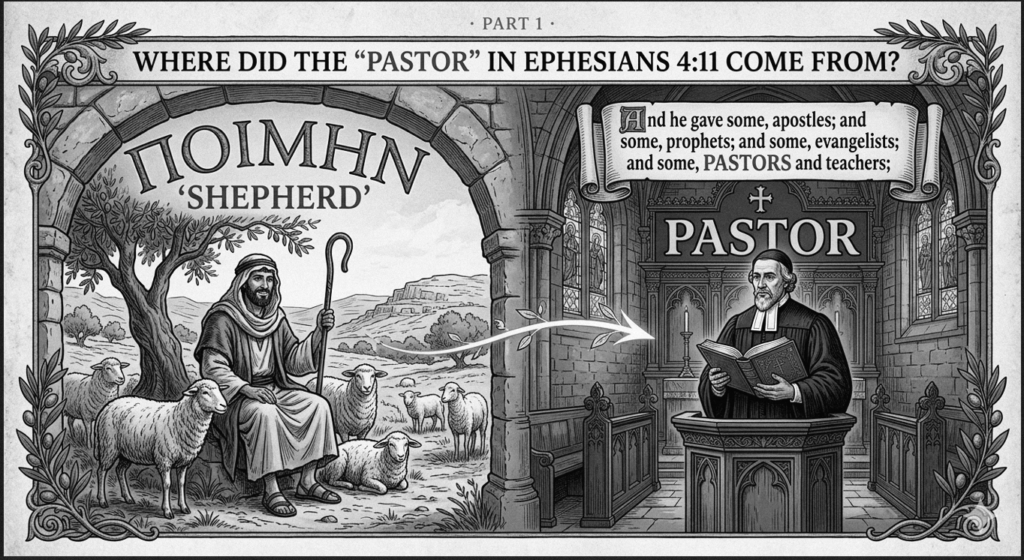
How Did the “Shepherd” Become a “Pastor”? – Part 2
From Greek ποιμήν to Latin pastor to modern “pastor,” this essay traces how a metaphor became an institution.
How Did the “Shepherd” Become a “Pastor”? – Part 2 Read More »
From Greek ποιμήν to Latin pastor to modern “pastor,” this essay traces how a metaphor became an institution.
How Did the “Shepherd” Become a “Pastor”? – Part 2 Read More »
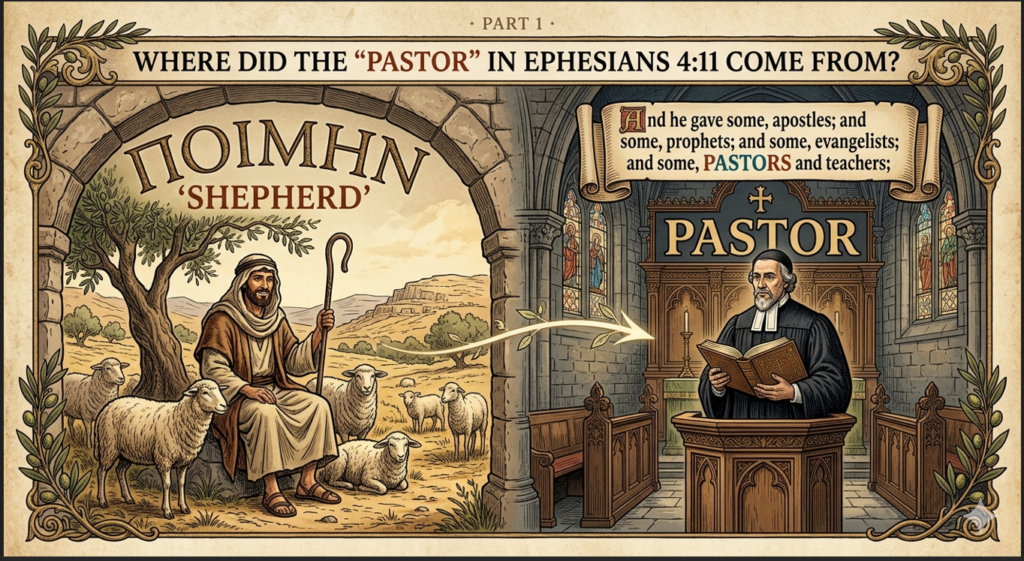
Is the “pastor” in Ephesians 4:11 truly grounded in the original text? This essay examines the Greek term ποιμήν and the inconsistency in its translation.
Where Did the “Pastor” in Ephesians 4:11 Come From? – part 1 Read More »

A common Christian assumption identifies kairos as “God’s time” and chronos as “human time.” This essay challenges that simplification by examining their linguistic meanings and biblical usage, showing that both terms function across divine and human activity while reflecting different dimensions of time—qualitative and quantitative.
Kairos and Chronos — A Theological Reconsideration of Time Read More »
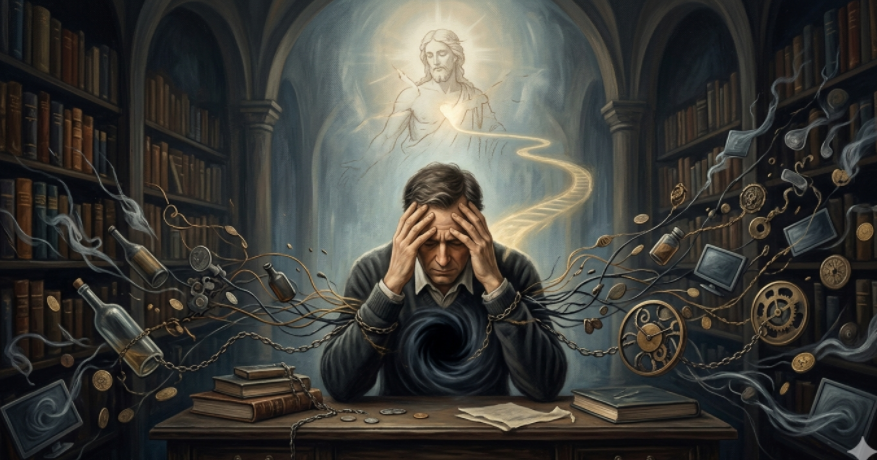
A theological reflection on addiction as the loss of self-control rooted in humanity’s separation from God. Drawing on the insights of Augustine, Pascal, and the Apostle Paul, this essay explores how the human attempt to fill the inner void apart from God leads to various forms of addiction, and how communion with the Holy Spirit restores self-control and spiritual freedom.
A Theological Reflection on Addiction Read More »
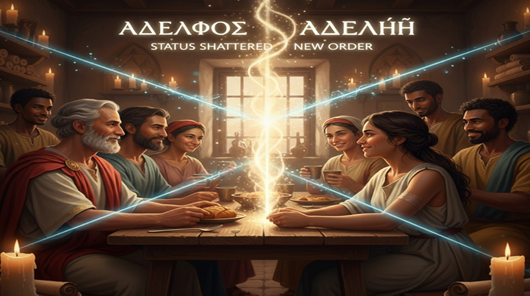
The titles “Brother” and “Sister” in the early church were not mere greetings; they were revolutionary declarations that shattered the Roman social hierarchy. Author Jo Bee Soo provocatively suggests stripping away modern church titles that have become new castes and returning to the original horizontal order of Christ.
Brothers and Sisters: A Title that Shatters Status and Caste Read More »

Why did Christianity reject the interpretive convenience of Dualism in order to affirm the material world?
This essay explores the sacred refraction introduced by the Incarnation and the fateful task of theology: to interpret a world marked by both divine goodness and undeniable suffering.